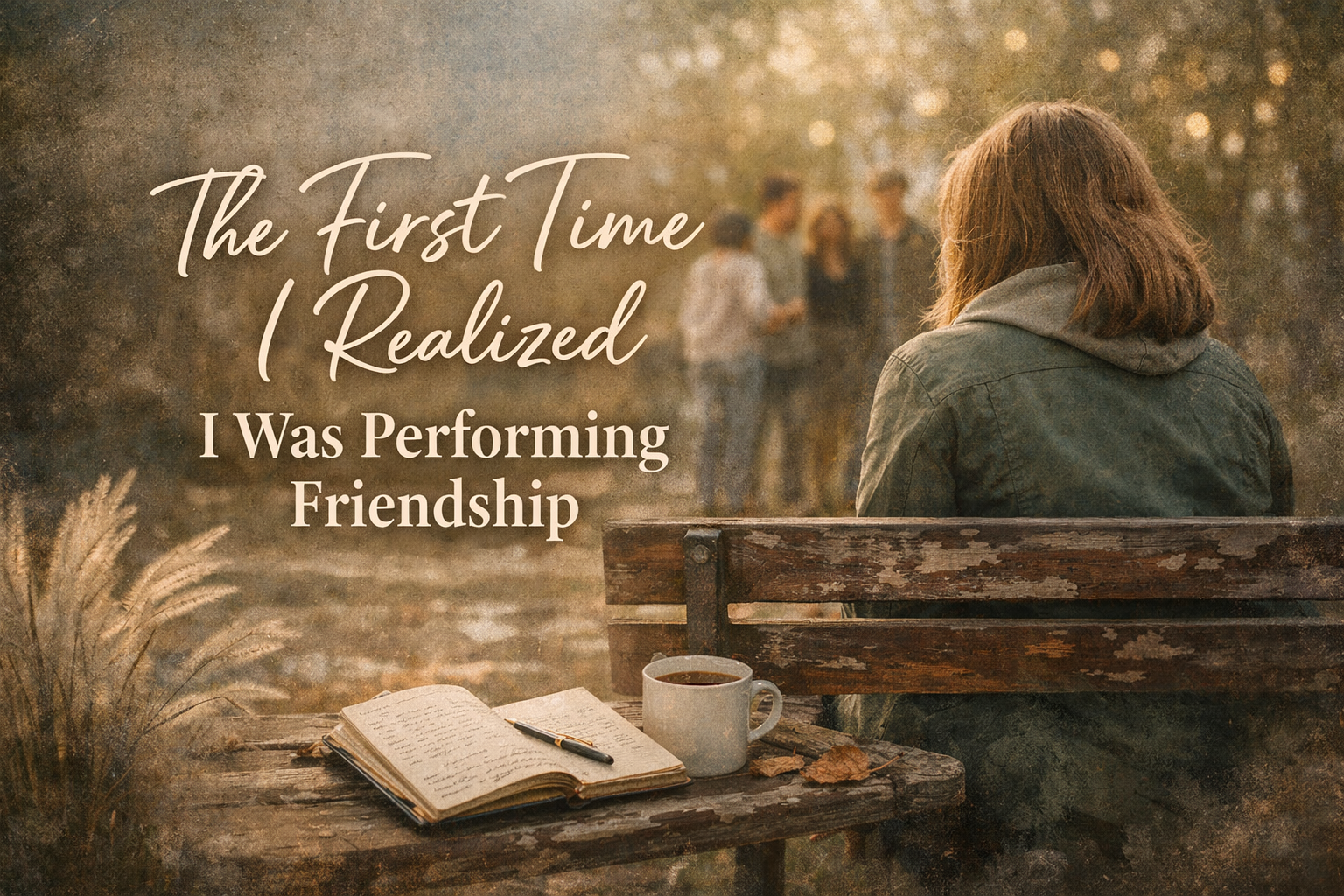
There was a moment—not dramatic, not loud—when I realized something uncomfortable about my past friendships.
I wasn’t always connecting.
Sometimes, I was performing.
For a long time, I didn’t understand the difference between genuinely caring about someone and acting like the kind of friend I wished I had. I showed up. I said the right things. I mirrored the energy, the loyalty, the support I wanted in return—because doing so made me feel safe, accepted, and valued.
And to be clear, I don’t regret the memories. I shared laughter, inside jokes, late nights, and real moments with people I once called friends. I still cherish many of them. But looking back honestly, I can also admit this: my heart wasn’t always fully in those friendships. I was present where I thought I was supposed to be, doing what I thought a good friend should do, without always offering true emotional connection.
If that realization stings, it should. It did for me too.
When Parenthood Opens Old Doors
What brought this reflection to the surface was becoming a mom to a grade schooler.
My daughter talks about her friends on the playground, in the classroom, and at extracurriculars. She casually names them the way kids do—light, hopeful, uncomplicated. And as I listen, I find myself walking down memory lane, seeing the faces of my own childhood friends. I remember their names. I remember their laughs.
One of my closest friends today is someone I met in kindergarten. Another childhood friend is still part of my life. Those relationships lasted because they were rooted in something real.
But most of the faces I remember belong to friendships I worked very hard to maintain—because fitting in felt essential. I wanted a big circle. I wanted to be liked. I wanted to belong. And so I did what I needed to do to make that happen.
If I had known then what I know now about emotional connection, boundaries, and genuine friendship, I would have invested differently. I would have spent less time performing and more time nurturing the people who truly saw me—and showed up for me without conditions.
The Difference Between Performing and Belonging
Today, my circle is small. The people I call friends are few, and most of them feel more like family. Not because I’m guarded—but because I’m intentional.
True friendship feels different in your body.
Performing friendship is exhausting. It drains you. It requires constant emotional output with little return. You leave interactions feeling depleted, restless, or wondering if you should have been somewhere else.
Genuine friendship doesn’t do that.
Real connection energizes you—even when you’re doing absolutely nothing together. Sitting on a couch. Running errands. Existing side by side. Going “out of your way” for them never feels like a burden, because the relationship itself is the reward.
That’s how I know now.
An Apology I Needed to Say
I owe apologies—to the people who could sense I was performing instead of connecting. You deserved honesty and presence.
And I owe apologies to the friends who deserved my full, genuine self and didn’t always receive it.
I can’t rewrite those moments, but I can live differently now. I choose to give my time, energy, thoughts, and emotions to the people who meet me in truth. If you’re one of them—you know who you are—and I love you deeply.
Where This Story Lives More Fully
This idea—performing friendship—is at the heart of my novel, Sweet Lies & Burnt Grounds.
Valorie tells herself she’s a good friend. She believes she’s deeply connected to the people around her—even as she sacrifices her morals, values, and sense of self to maintain those relationships. But the question lingers beneath every choice she makes:
Is this genuine connection… or is she just playing the role she wishes someone had played for her?
And if you have to give up who you are to belong—was it ever real to begin with?
That question is explored far more deeply in the book, and if this reflection resonated with you, you may find yourself inside Valorie’s story more than you expect.
👉 Sweet Lies & Burnt Grounds is available on Amazon.
If you’ve ever questioned your friendships, your belonging, or the cost of connection—this story is for you.